



Blog Categories
Business Analysis
Teaching Claude How You Work
Posted in Agile Development, Artificial Intelligence, Business Analysis, Change Management, Product Development on 11th September 2026
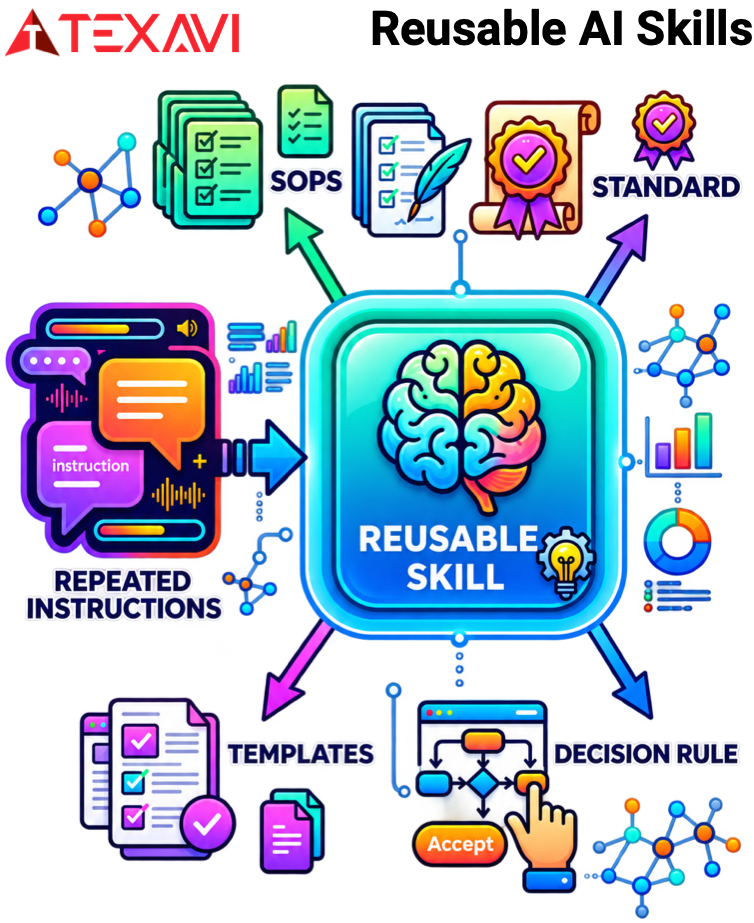
People assess the outcome, handle the exceptions, and still take responsibility for decisions with real consequences. That is how we would like these systems to function. The way we move from prompts to skills therefore alters the question that we ask. Not every task needs all available context. For a routine task, you only need the basic operating procedure and a template. In some instances, you will need additional reference material. A specialist task may require a different set of instructions or a script. Organising those communications makes it easier to maintain and understand the process. That also means you can make changes in the right place. This article by Rohit Mahadevu, AI and Digital Transformation Consultant at Texavi Innovative Solutions, puts the focus on reusable skills as opposed to prompting, when working with AI tools like Claude, read on...
AI Automation Without Atrophy
Posted in Agile Development, Artificial Intelligence, Business Analysis, Product Development on 31st August 2026
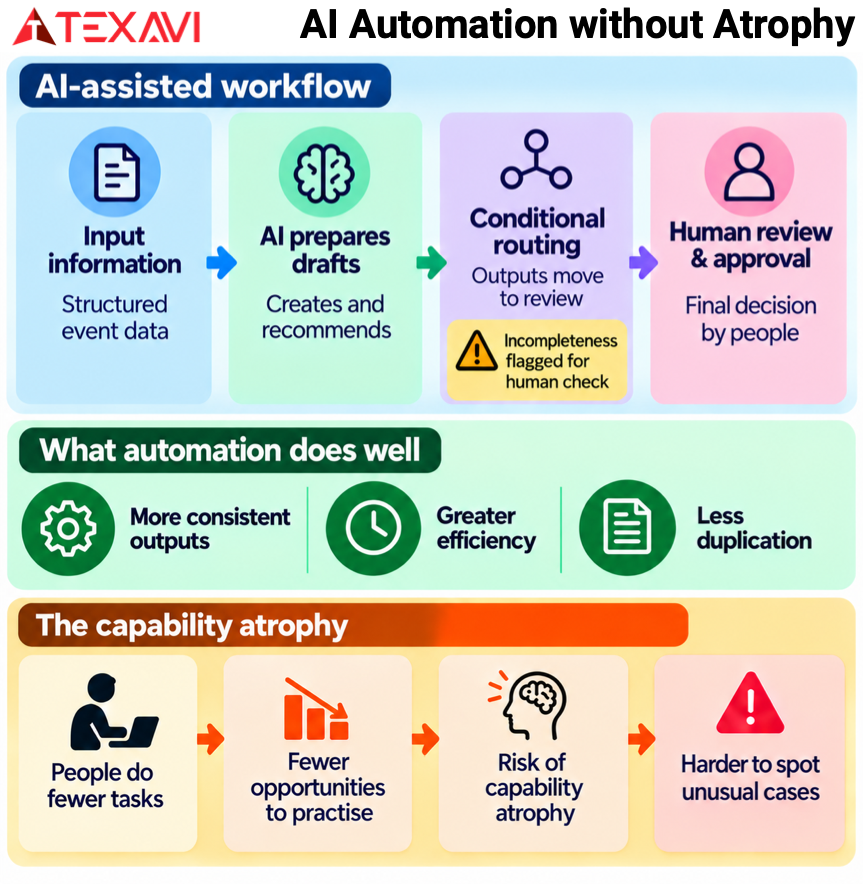
One of the easiest ways to judge an AI implementation is to ask how much effort it removes. A task that once took thirty minutes now takes five. A first draft appears in seconds. Information that once required searching across several sources arrives as a summary. Routine decisions can be supported before someone has finished opening the relevant files. AI can reduce the amount of thinking required to complete many tasks. That does not mean organisations should reduce the amount of thinking their people are capable of doing. The strongest AI-assisted organisations will not necessarily be those that automate the greatest percentage of work. They will be the ones that know which manual work can be offloaded to machines, where can human-judgement remain, and how to design systems that strengthen one without quietly weakening the other. Rohit Mahadevu (AI and Digital Transformation Consultant, Texavi Innovative Solutions) expresses his views on the practical implementation framework for AI automation. Read on...
Context Drift in AI Systems
Posted in Agile Development, Artificial Intelligence, Business Analysis, Change Management, eLearning Courses, Product Development on 7th August 2026
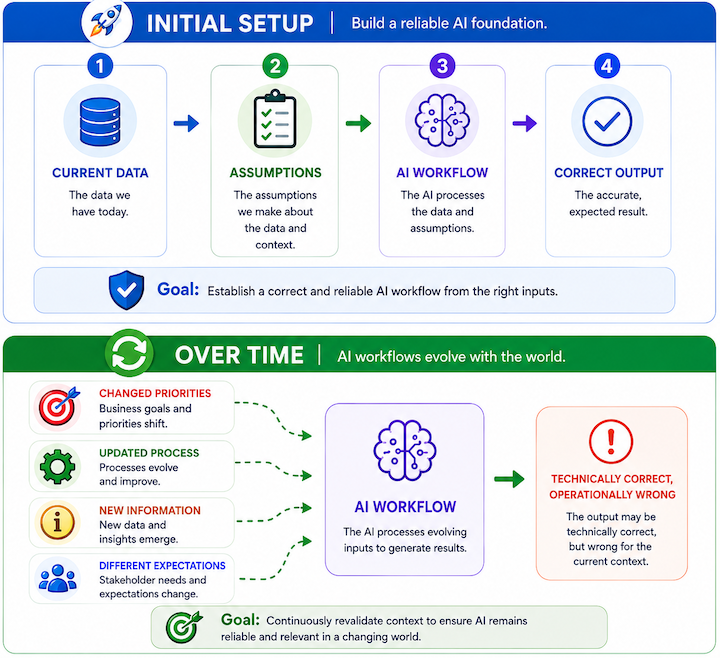
A reliable AI workflow should not merely generate outputs and move forward. It should create enough visibility for its assumptions to be challenged over time. That might mean reviewing repeated overrides, checking where escalations are increasing, looking at the difference between generated outputs and approved outputs, or identifying parts of the workflow that now require more human intervention than they did previously. The purpose is not constant optimisation. It is revalidation. There is an important difference. Optimisation asks how the system can perform the existing task better. Revalidation asks whether the system should still be performing the task in the same way. Rohit Mahadevu (AI and Digital Transformation Consultant, Texavi Innovative Solutions) expresses his views on Artificial Intelligence as a cognitive infrastructure framework. Read on...
When Automation Meets Exceptions in AI
Posted in Artificial Intelligence, Business Analysis, Change Management, Product Development on 21st July 2026
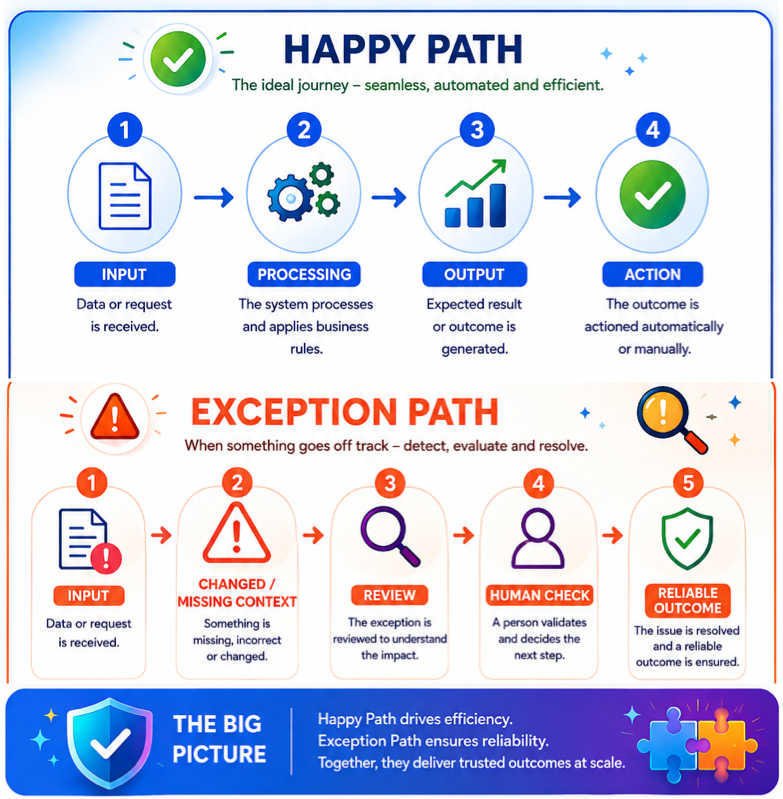
Once an AI system moves from demonstration into everyday use, exceptions are no longer at the edge of the system—they become part of the system. That changes how automation should be designed.A workflow that performs perfectly when everything goes according to plan proves that the technology can execute the happy path. It tells us very little about whether the system can survive real operations.The more useful question is: what happens when something does not fit? Read on...check out the article on managing the expectations with automation powered by artificial intelligence, written by Rohit Mahadevu, AI and Digital Transformation Consultant at Texavi Innovative Solutions.
From Prompts to Persistent Systems - The Evolution of AI
Posted in Agile Development, Artificial Intelligence, Business Analysis, Change Management on 5th July 2026
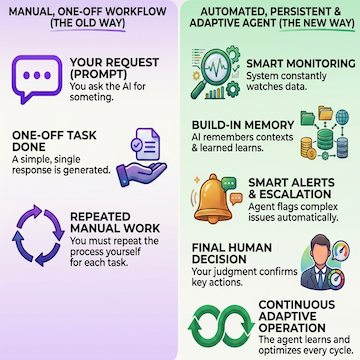
Prompt engineering will remain a useful skill. Someone still needs to know how to phrase an instruction clearly and give a model the right context. But it is a component skill, not an organisational strategy. The organisations that get ahead over the coming years won't be the ones with the best prompts. They'll be the ones who stopped asking AI to answer the same question every day and instead built something that kept answering it on its own - checking, remembering, escalating, and improving, with a person still firmly in charge of the decisions that matter.
Decision Architecture in the Age of AI
Posted in Agile Development, Artificial Intelligence, Business Analysis, Change Management on 18th June 2026
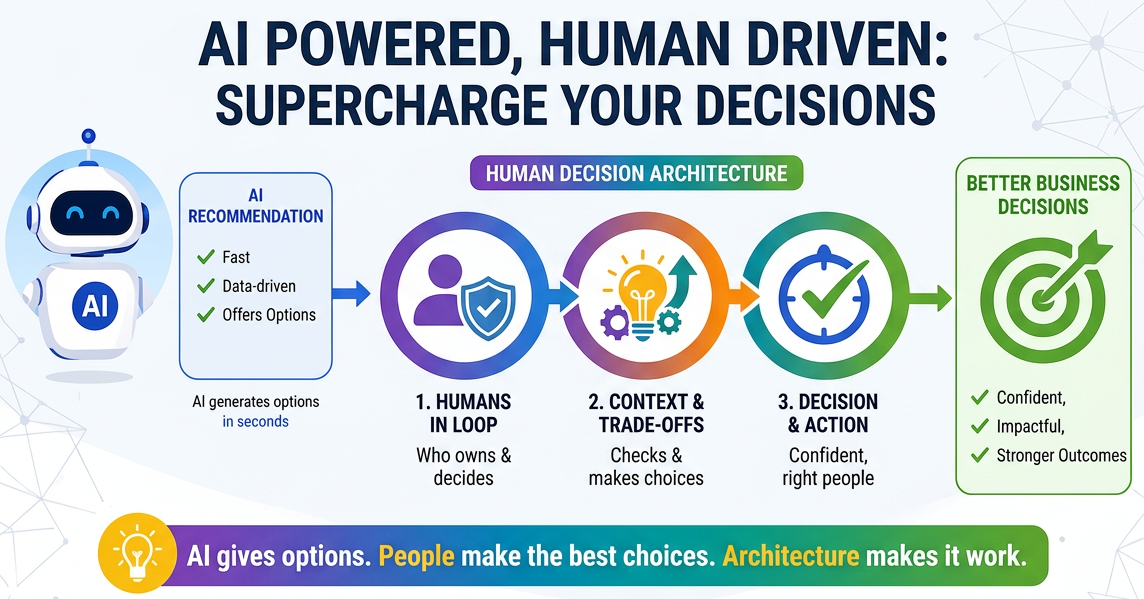
Most organisations investing in AI are optimising most of the AI in the next decade; they probably have the right layers. They are improving the quality of answers while ensuring decisions remain of high quality; implementations trace back to that gap being conflated it's not a fault of unmodified technology. AI can generate a recommendation in seconds, but it cannot determine whether an organisation should accept, challenge, escalate, or ignore that recommendation. That work still belongs to people, and it still depends on context, ownership, and judgement. This article introduces Decision Architecture: not a framework to install, but a way of noticing how decisions actually move through an organisation once AI becomes part of the process.
Governance Infrastructure: The Missing Layer of AI Transformation
Posted in Agile Development, Artificial Intelligence, Business Analysis, Change Management on 3rd June 2026
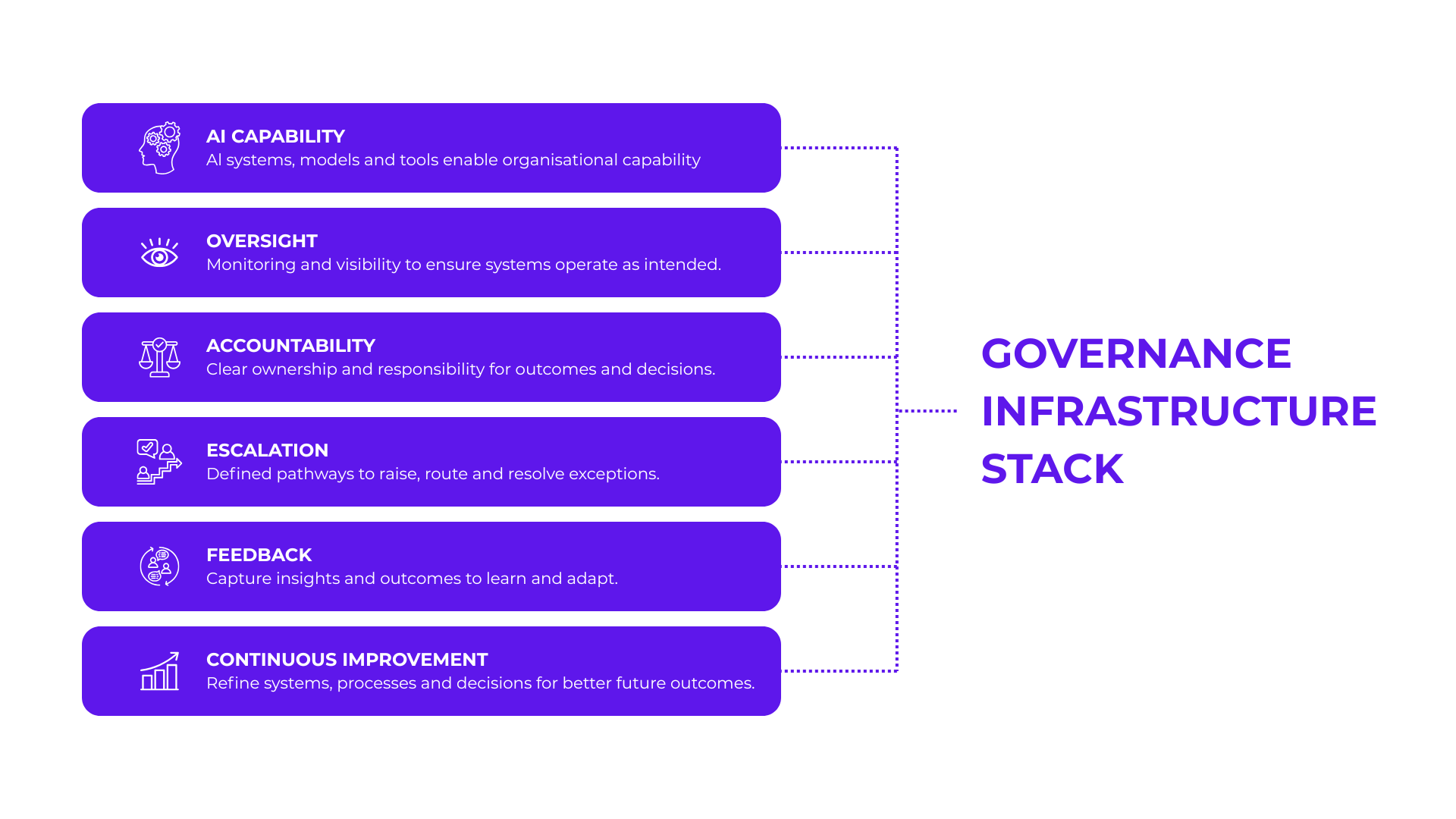
Governance infrastructure enables the responsible scaling of AI-enabled systems, ensuring oversight, corrections, trust, and extensions in increasingly vital areas of an organisation's operations. The gap between what AI systems can do and what organisations can currently account for is not an inevitable feature of AI adoption. It is a design choice. Organisations are choosing, implicitly or explicitly, to build capability before accountability.
The Forgotten Infrastructure of Digital Transformation
Posted in Artificial Intelligence, Business Analysis, Change Management, Product Development on 16th May 2026
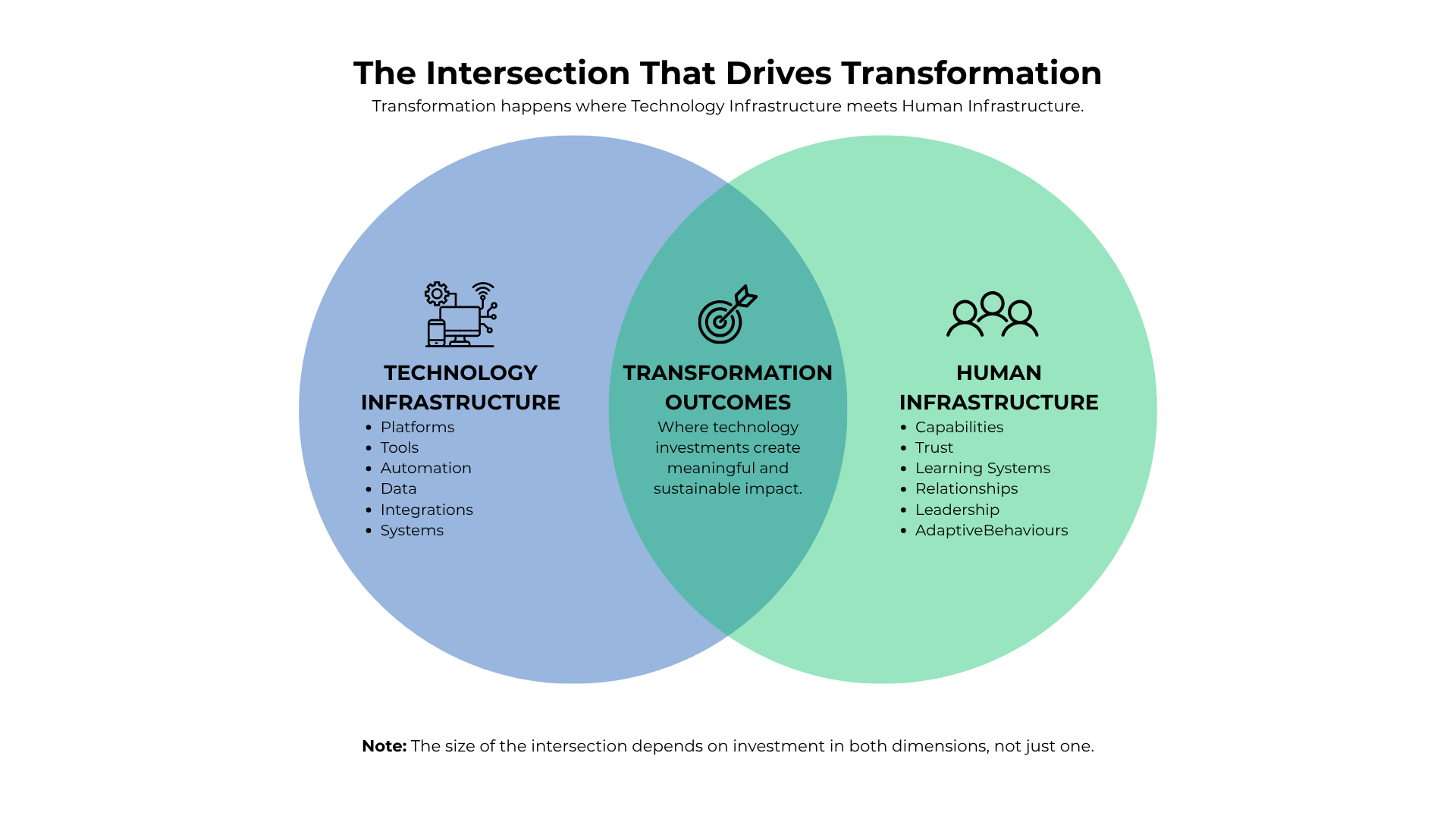
The infrastructure that makes digital transformation succeed is often different from the infrastructure that receives the most investment. Human infrastructure explains that gap. It encompasses the capabilities, trust networks, learning systems, and adaptive behaviours that enable technology investments to fulfil their intended purpose. Transformation that invests in technology without investing equally in people does not slow the rate of change. It creates an organisation that changes the appearance of work without altering its substance.
Building AI-Assisted Community Operations: From Tools to Workflows
Posted in Artificial Intelligence, Business Analysis, Change Management, Product Development on 30th April 2026
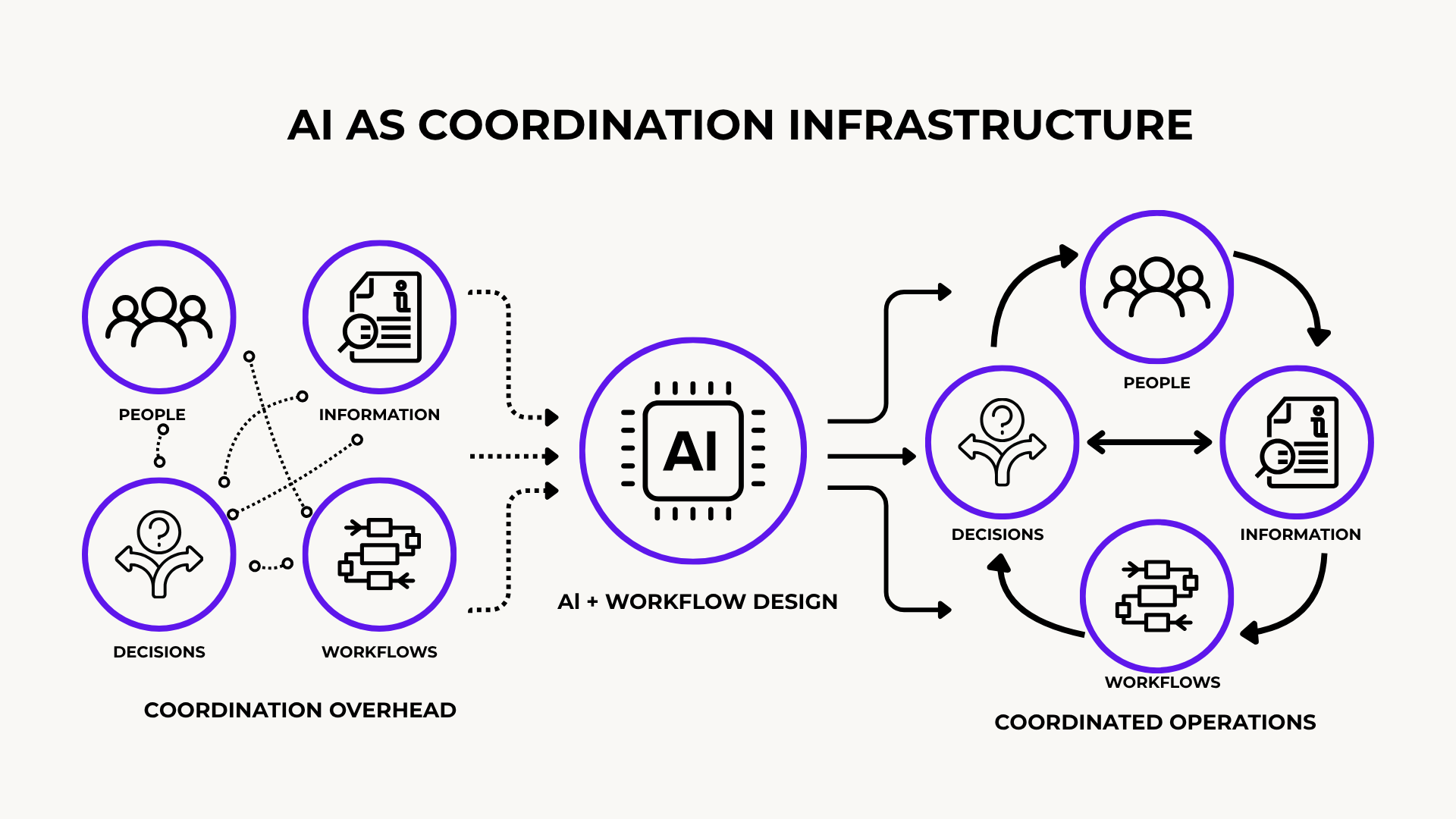
The advantage from AI over the coming years will not come from access to tools. Most tools will be accessible to most organisations at roughly equivalent cost. The advantage will come from the quality of the operational infrastructure surrounding those tools: the workflow design, the prompt architecture, the integration quality, and the trust built with the people who need to use the systems every day.
AI is Not a Tool, it is Cognitive Infrastructure!
Posted in Artificial Intelligence, Business Analysis, Change Management, Product Development on 12th April 2026
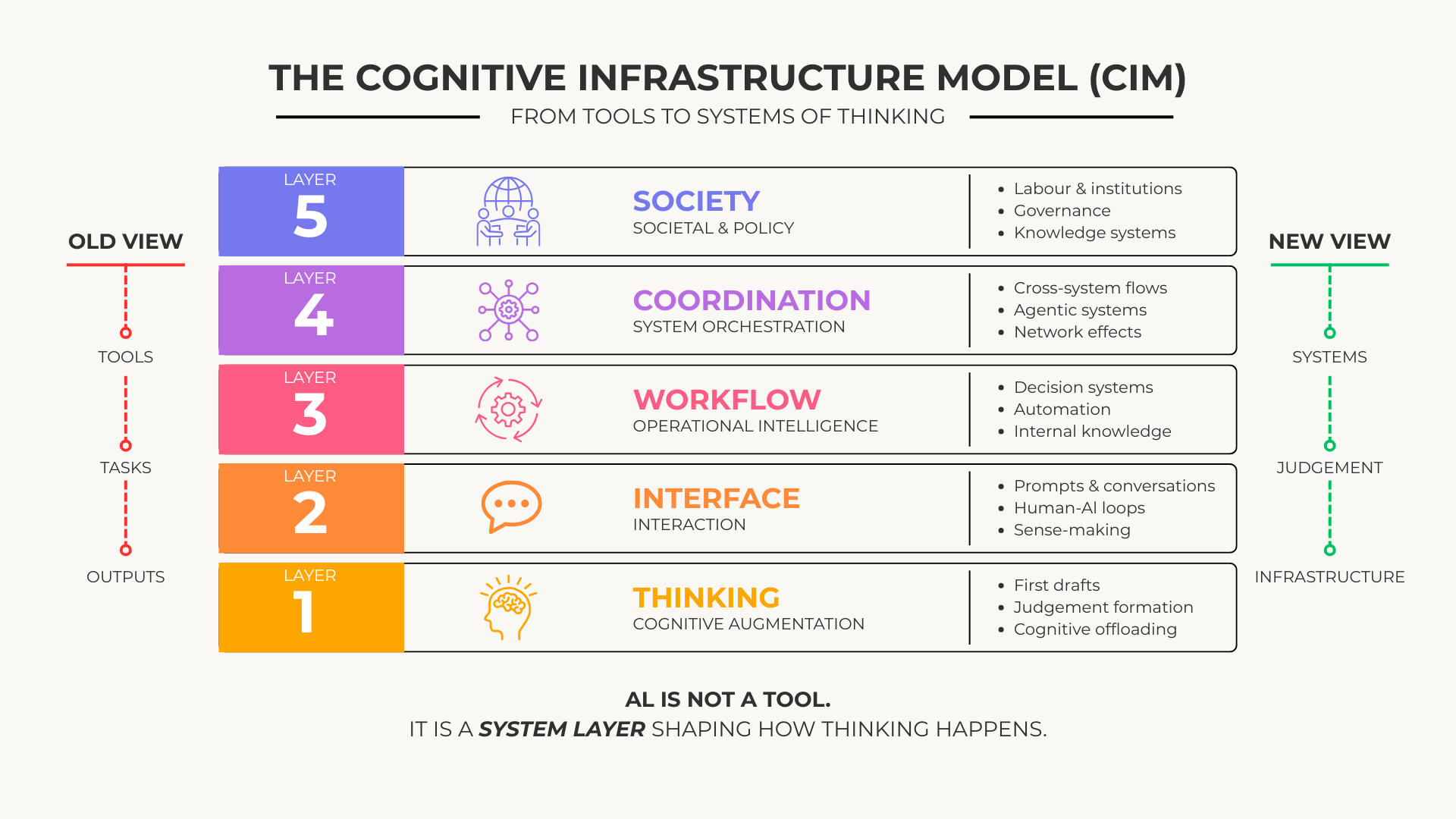
There is a quiet ‘category error’ sitting at the centre of much of the AI conversation right now, and it is shaping decisions that will outlive the people making them. We keep calling AI a tool. Tools are picked up and put down. Tools sit in a drawer until needed. A hammer does not change what a wall is, what a house means, or how a neighbourhood feels. The framing is comfortable because it puts us in charge: we choose, we wield, we set down. I would argue, though, that it is the wrong frame. It is wrong in the way that calling electricity “a better candle” was wrong in 1890. The artefact is recognisable; the substrate it creates is not. What we are actually building, and stitching into the daily fabric of work and life, is starting to behave more like cognitive infrastructure. Something that increasingly mediates how we perceive, decide, coordinate, and remember. You do not “use” infrastructure the way you use a tool. You live inside it. The question of who designs it, who maintains it, and who gets to question it becomes a different kind of question entirely. This distinction is not academic. It changes the strategy. Rohit Mahadevu (AI and Digital Transformation Consultant, Texavi Innovative Solutions) expresses his views on Artificial Intelligence as a cognitive infrastructure framework. Read on...
 ® and Analyst Zone® © Since 2017 Texavi Innovative Solutions